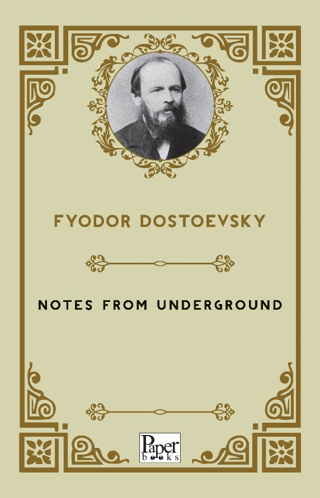
Notes from Underground
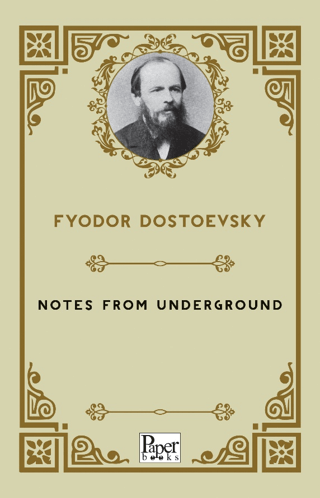
Notes from Underground is a novella by Fyodor Dostoevsky, first published in the journal Epoch in 1864. It is a first-person narrative in the form of a “confession”: the work was originally announced by Dostoevsky in Epoch under the title “A Confession”.
The novella presents itself as an excerpt from the memoirs of a bitter, isolated, unnamed narrator (generally referred to by critics as the Underground Man), who is a retired civil servant living in St. Petersburg. Although the first part of the novella has the form of a monologue, the narrator’s form of address to his reader is acutely dialogized. According to Mikhail Bakhtin, in the Underground Man’s confession “there is literally not a single monologically firm, undissociated word”. The Underground Man’s every word anticipates the words of an other, with whom he enters into an obsessive internal polemic.
The Underground Man attacks contemporary Russian philosophy, especially Nikolay Chernyshevsky’s What Is to Be Done? More generally, the work can be viewed as an attack on and rebellion against determinism: the idea that everything, including the human personality and will, can be reduced to the laws of nature, science and mathematics.
Notes from Underground is a novella by Fyodor Dostoevsky, first published in the journal Epoch in 1864. It is a first-person narrative in the form of a “confession”: the work was originally announced by Dostoevsky in Epoch under the title “A Confession”.
The novella presents itself as an excerpt from the memoirs of a bitter, isolated, unnamed narrator (generally referred to by critics as the Underground Man), who is a retired civil servant living in St. Petersburg. Although the first part of the novella has the form of a monologue, the narrator’s form of address to his reader is acutely dialogized. According to Mikhail Bakhtin, in the Underground Man’s confession “there is literally not a single monologically firm, undissociated word”. The Underground Man’s every word anticipates the words of an other, with whom he enters into an obsessive internal polemic.
The Underground Man attacks contemporary Russian philosophy, especially Nikolay Chernyshevsky’s What Is to Be Done? More generally, the work can be viewed as an attack on and rebellion against determinism: the idea that everything, including the human personality and will, can be reduced to the laws of nature, science and mathematics.
| Taksit Sayısı | Taksit tutarı | Genel Toplam |
|---|---|---|
| 2 | 87,10 | 174,20 |
| 3 | 60,07 | 180,22 |
| 6 | 30,93 | 185,59 |
| 9 | 21,34 | 192,10 |
-
 Tükendi
 -
Tükendi
-