



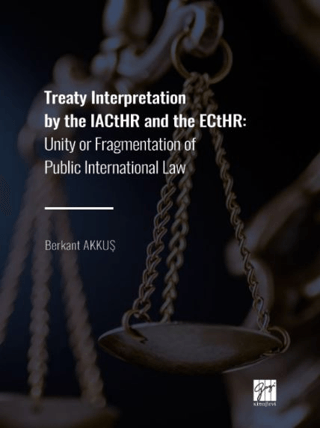
Treaty Interpretation by the IACtHR and the ECtHR Unity or Fragmentation of Public International Law

İçindekiler:
CHAPTER 1
1.1. Theoretical Aspects of Article 31(3)(c)
1.2. Article 31(3)(c): Intention, Interpretation and Scope
1.3. The Temporal Element
1.4. ‘The Parties’
CHAPTER 2
Section 1- References to Article 31(3)(c) in the Case Law of the European Court of Human Rights
2.1.1. Golder v The United Kingdom
2.1.2. Banković et al v Belgium and 16 other States
2.1.3. The ‘State Immunity’ Cases
2.1.4. Mamatkulov and Askarov v Turkey
2.1.5. Bosphorus Hava Yolları Turizm ve Ticaret Anonim Şirketi v Ireland
2.1.6. Behrami and Behrami v France
2.1.7. Demir and Baykara v Turkey
2.1.8. Rantsev v Cyprus and Russia
2.1.9. Nada v Switzerland
2.1.9.A. International System European Subsystem v Broader International System
2.1.9.B. Systemic Integration in a Pluralistic Context: Static v Dynamic Integration
2.1.9.C. Review of the Acts of the UNSC and the Hierarchy of Rules
2.1.10. The ‘Child Abduction’ Cases
Section 2- The ECtHR and the Interpretive Method of External Referencing
2.2.1. Special Characteristics of Human Rights Treaties and the Vienna Rules of Interpretation
2.2.2. ECHR’s Application of Article 31(3)(c)
2.2.3. Special or Pointless?
2.2.4. Inconsistent Referencing
2.2.5. The Spectrum of Relevant Rules
2.2.6. Evolutive Interpretation
2.2.7. The Functions of Article 31(3)(c)
2.2.8. Conclusion
Section 3-References to Article 31(3)(c) in the Case Law of the Inter-American Court of Human Rights
2.3.1. The “Street Children” (Villagrán Morales et al.) v. Guatemala
2.3.1.A. The UN Convention on the Rights of the Child: the duty to prevent juvenile crimes and the duty to rehabilitate
2.3.2. The Gomez Paquiyauri Brothers vs Peru
2.3.3. Children’s rights
2.3.4. Serrano Cruz Sisters v. El Salvador
2.3.5. Ituango Massacres v. Colombia
2.3.6. Indigenous Peoples’ Right to Ancestral Lands
2.3.6.A. Indigenous Peoples’ Land Rights: The Question Of ‘Consultation’ v. ‘Consent’
2.3.6.B. Systemic Interpretation of Article 21 of the Convention
Section 4-The IACtHR and the Interpretive Method of External Referencing
2.4.1. The IACtHR and the Interpretive Method of External Referencing
2.4.2. Interpreting The ACHR Specific Rules on Treaty Interpretation
2.4.3. Evolutive Interpretation
2.4.4. The Use of External Sources as Interpretive Tools
2.4.5. Soft Law
2.4.6. Non-Ratified Treaties
2.4.7. Convergence with International Humanitarian Law
2.4.8. Legitimacy of Cross-Referencing?
2.4.9. Use of Non-Binding External Instruments
2.4.10. Universalism v Consensus
2.4.11. Conclusion
CHAPTER 3
3.1. The MFP Clause in Human Rights Treaties
3.2. The MFP Clause in Theory
3.3. The Function of the Clause
3.4. The MFP Clause in Practice
3.5. A New Way to Apply to Clause
3.6. Conclusion
İçindekiler:
CHAPTER 1
1.1. Theoretical Aspects of Article 31(3)(c)
1.2. Article 31(3)(c): Intention, Interpretation and Scope
1.3. The Temporal Element
1.4. ‘The Parties’
CHAPTER 2
Section 1- References to Article 31(3)(c) in the Case Law of the European Court of Human Rights
2.1.1. Golder v The United Kingdom
2.1.2. Banković et al v Belgium and 16 other States
2.1.3. The ‘State Immunity’ Cases
2.1.4. Mamatkulov and Askarov v Turkey
2.1.5. Bosphorus Hava Yolları Turizm ve Ticaret Anonim Şirketi v Ireland
2.1.6. Behrami and Behrami v France
2.1.7. Demir and Baykara v Turkey
2.1.8. Rantsev v Cyprus and Russia
2.1.9. Nada v Switzerland
2.1.9.A. International System European Subsystem v Broader International System
2.1.9.B. Systemic Integration in a Pluralistic Context: Static v Dynamic Integration
2.1.9.C. Review of the Acts of the UNSC and the Hierarchy of Rules
2.1.10. The ‘Child Abduction’ Cases
Section 2- The ECtHR and the Interpretive Method of External Referencing
2.2.1. Special Characteristics of Human Rights Treaties and the Vienna Rules of Interpretation
2.2.2. ECHR’s Application of Article 31(3)(c)
2.2.3. Special or Pointless?
2.2.4. Inconsistent Referencing
2.2.5. The Spectrum of Relevant Rules
2.2.6. Evolutive Interpretation
2.2.7. The Functions of Article 31(3)(c)
2.2.8. Conclusion
Section 3-References to Article 31(3)(c) in the Case Law of the Inter-American Court of Human Rights
2.3.1. The “Street Children” (Villagrán Morales et al.) v. Guatemala
2.3.1.A. The UN Convention on the Rights of the Child: the duty to prevent juvenile crimes and the duty to rehabilitate
2.3.2. The Gomez Paquiyauri Brothers vs Peru
2.3.3. Children’s rights
2.3.4. Serrano Cruz Sisters v. El Salvador
2.3.5. Ituango Massacres v. Colombia
2.3.6. Indigenous Peoples’ Right to Ancestral Lands
2.3.6.A. Indigenous Peoples’ Land Rights: The Question Of ‘Consultation’ v. ‘Consent’
2.3.6.B. Systemic Interpretation of Article 21 of the Convention
Section 4-The IACtHR and the Interpretive Method of External Referencing
2.4.1. The IACtHR and the Interpretive Method of External Referencing
2.4.2. Interpreting The ACHR Specific Rules on Treaty Interpretation
2.4.3. Evolutive Interpretation
2.4.4. The Use of External Sources as Interpretive Tools
2.4.5. Soft Law
2.4.6. Non-Ratified Treaties
2.4.7. Convergence with International Humanitarian Law
2.4.8. Legitimacy of Cross-Referencing?
2.4.9. Use of Non-Binding External Instruments
2.4.10. Universalism v Consensus
2.4.11. Conclusion
CHAPTER 3
3.1. The MFP Clause in Human Rights Treaties
3.2. The MFP Clause in Theory
3.3. The Function of the Clause
3.4. The MFP Clause in Practice
3.5. A New Way to Apply to Clause
3.6. Conclusion
| Taksit Sayısı | Taksit tutarı | Genel Toplam |
|---|---|---|
| 2 | 70,62 | 141,24 |
| 3 | 48,71 | 146,12 |
| 6 | 25,08 | 150,48 |
| 9 | 17,31 | 155,76 |