



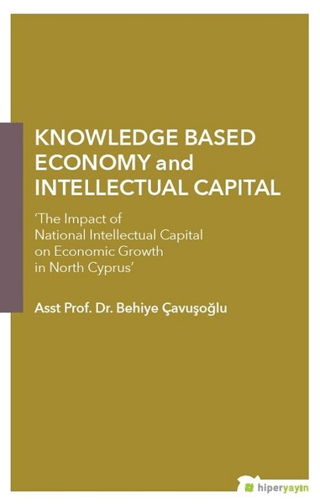
Knowledge Based Economy and Intellectual Capital The Impact of National Intellectual Capital on Economic Growth in North Cyprus

The development of the modern economy depends directly on the formation of basic knowledge variables. The term ‘knowledge-based economy' is used to define an economy which knowledge and knowledge creation plays a crucial role for growth. It is not possible to survive in the new world with the old economic thought and mentality. According to Chavula(2010), knowledge is at the heart of economic growth, as it increaases the ability to take advantage of existing technologies and innovations, enhanced competitiveness and productivity. Many economies are now seeking to shift their economies towards a technology-based economy. To do this, a country's knowledge and information abilities have to be able to produce technology. Knowledge-based economic activities allow countries to create value by increasing the productive capacities of the factors of production. Steward (1997) emphasized the significance of knowledge and intellectual capital with the increasing use of technology. The importance of knolwedge is now leading to an increase in the importance of measuring this knowledge. Some of common findings of Kaplan, Norton and Edvinsson were based on the theory that ‘you cannot manage intellectual capital if you cannot measure it'. This book also explains how intellectual capital can be included in the growth function and how it can be measured with the World Bank Knowledge Assesment Method. You should read this book to understand the changing economic systems, to keep up with it and to adapt it to your own system.
The development of the modern economy depends directly on the formation of basic knowledge variables. The term ‘knowledge-based economy' is used to define an economy which knowledge and knowledge creation plays a crucial role for growth. It is not possible to survive in the new world with the old economic thought and mentality. According to Chavula(2010), knowledge is at the heart of economic growth, as it increaases the ability to take advantage of existing technologies and innovations, enhanced competitiveness and productivity. Many economies are now seeking to shift their economies towards a technology-based economy. To do this, a country's knowledge and information abilities have to be able to produce technology. Knowledge-based economic activities allow countries to create value by increasing the productive capacities of the factors of production. Steward (1997) emphasized the significance of knowledge and intellectual capital with the increasing use of technology. The importance of knolwedge is now leading to an increase in the importance of measuring this knowledge. Some of common findings of Kaplan, Norton and Edvinsson were based on the theory that ‘you cannot manage intellectual capital if you cannot measure it'. This book also explains how intellectual capital can be included in the growth function and how it can be measured with the World Bank Knowledge Assesment Method. You should read this book to understand the changing economic systems, to keep up with it and to adapt it to your own system.
| Taksit Sayısı | Taksit tutarı | Genel Toplam |
|---|---|---|
| 2 | 106,33 | 212,66 |
| 3 | 73,34 | 220,02 |
| 6 | 37,76 | 226,58 |
| 9 | 26,06 | 234,53 |